
Music is a Forest, Part One. Why taste can't and won't be replaced by AI.
A few stories from AI country.

Lean back listens are killing me softly.
I know when the algorithm has taken over on Spotify.
I feel like it’s obvious to anyone with good ears. When it happens, I make the same kind of concerned face (nose alert, eyebrows up like a meerkat) I do when I’m worried something might be burning.
The fact that it’s not bad music is half the point. A verb-drenched guitar jangles, while a singer goes on about whatever over a cool-groove-instrumental-thing. Or maybe I listened to a 60s song by The Hollies and now it’s giving me groundbreaking recommendations like The Beatles. It’s fine. The problem is that a vacuum of taste has opened up in the room like a black hole. The whatever-ness of it is palpable; the ways in which it mimics ‘the vibe’ of what has just been on, yet floats debris-like on its own flat, contextless ocean, is enough to ruin the atmosphere. I find it embarrassing even if I’m alone.
Spotify’s algorithm is trained to give me what I want1. I can even train it! But with all the improvements to its algorithms and my willingness to love new music, I just don’t care about what it’s giving me. Now, why would that be?
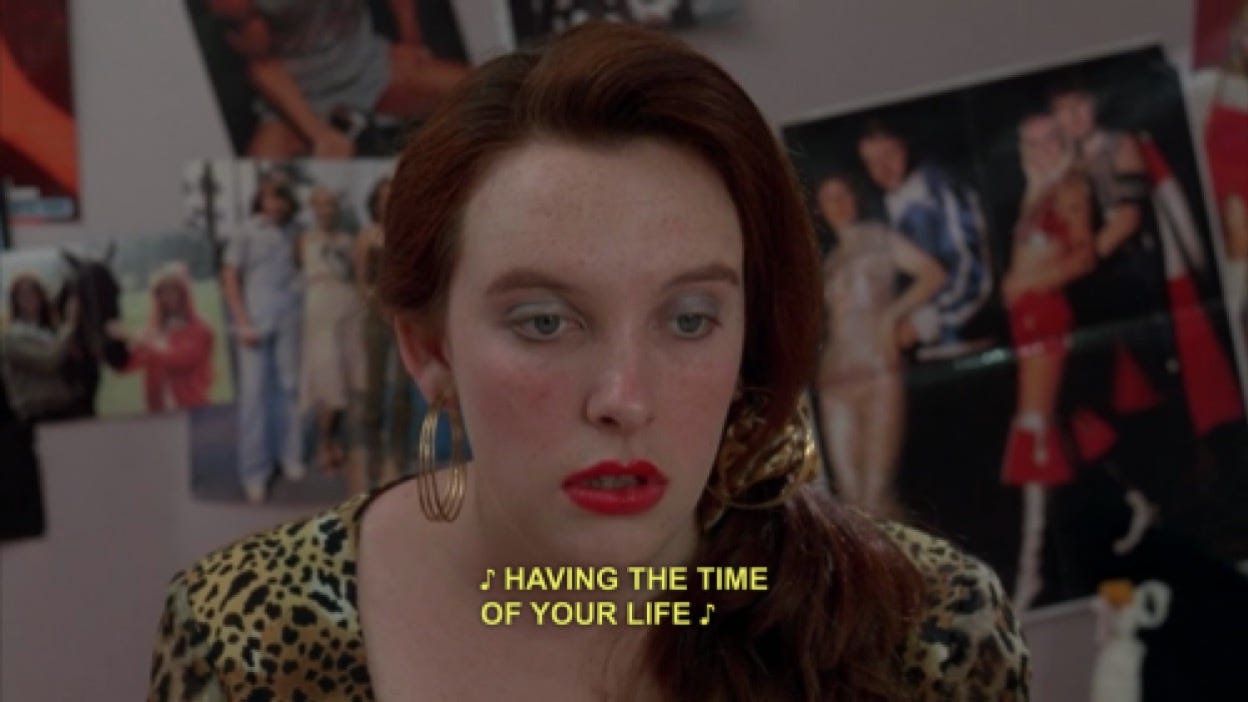
“I think that the worst art is art that has the least capacity to be disliked by the viewer.”
-Curator Anna Choutova explained her definition of bad art during her 2016 “Bad Art” show. She would not have enjoyed Harry’s performance at the Brit Awards, I feel.
A musician and a technologist get married.
As large language models (LLMs) and recommendation algorithms have become part of our daily lives, I’m intrigued by their usefulness and amused by their obvious limitations, but I’ve never seen them as an existential threat to my job as an artist. Even back in 2019 when my husband Rupert, a creative technologist then working at Google Creative Lab in Sydney, played me the first iterations of what would become Udio, I wasn’t freaked out artistically. I thought that AI would probably come to be its own identifiable style, like Y2K or Pixel UI, and this style would become fashionable for a while, an option and a tool we assimilate and traverse stylistically, and eventually even become nostalgic for.
Hearing these early models generate songs ‘in the style of Michael Hutchence singing a christmas carol’ sounded to me like the most cringe co-writer in the room throwing shit at the wall more than the future of music, though Rupes was emphatic about how quickly they would improve. What we both recognised though was the threat these models posed to ownership and copyright for songwriters and recording artists. We may have been among the first to understand this in Australia, and took our concerns to the heads of APRA AMCOS (I’ve been an Apra Ambassador for almost a decade) in 2020 about the implications for its thousands of members, songwriters like me.
Since 2024 we’ve been living in San Francisco while Rupes works on the next generation of personal computing. I’ve been an eager adopter of new technology whilst also being sceptical of the tech industry’s assuredness that users want everything about our digital experience to be ‘optimised’ by AI, when what we’ve seen it deliver so far for ordinary people is more of a “mid revolution of mid tasks”2.
I believe the threat AI poses is a structural one for the musical ecosystem: as companies like Spotify and Suno apply a plantation-style extractive model to music, a medium where its actual value is at odds with convenience, music is being turned into a utility and musicians and artists its low paid workforce. The consequences of this shift are revealing themselves, as new artists struggle to cut through and slopwave infiltrates, and pretty much every artist I know is not jazzed about it.
It’s not perfect but it’s ours
Whether you love a piece of music instantly or grow to love it over time has nothing to do with how similar it is to something else you like. That undeniable “who is this?!” feeling owes everything to an intoxicating mix of factors: where you were, what you heard it through, and who wanted - or didn’t want - you to listen. We understand instinctively that the transference of taste is an act of kinship. An algorithm can’t force me to listen to Bette Midler like my 90s babysitter Caroline could, but eight-year-old me knew that blasting The Rose at full volume was her way of saying: this matters to me, and so do you.
An algorithm doesn’t have a direct relationship with me, no matter how much deep personalisation it offers. The algorithm isn’t trying to flirt with me, befriend me, provoke, impress or dazzle me. It isn’t trying to be part of my community or make shared memories with me. It isn’t trying to make money to survive, like a band playing a gig or a record store. It isn’t even trying to sell me something with the swagger of a label. It has no taste of its own to impart, and no emotional stake in the outcome of mine. There is no why.3 And the why matters a lot, turns out.
Even if people are listening, and listening more, doesn’t mean the current streaming model isn’t unsustainable when the two concepts – the value of music & optimising value extraction – are inherently at odds. Jimmy Lovine said recently that music streaming is “minutes away from being obsolete,” because of the lack of true connection between artist and listeners. It’s hard to fathom something as big as Spotify not lasting, but I agree it will ultimately disintegrate as he says:
“The artist wanna communicate with their fans, period. That’s what they want,” he explained. “They wanna communicate, they wanna market themselves, and the streaming services are still saying, ‘We’ll put you on our list, if you’re nice to us, or if you like us.’ That’s bullshit.”
Others like Ted Gioia and Liz Pelly have spoken about this at length. Gioia has gloomy predictions about what he says is the flawed economics of streaming, and Pelly has been writing about streaming for close to a decade. There’s one quote from her reporting that haunts her, she said:4
“There’s this former employee who I interviewed who told me that the whole goal of the Spotify recommendation apparatus is to help reduce the cognitive work that someone has to do when they open this app. And when I hear the phrase, ‘reduce cognitive work,’ it just sounds like saying, ‘help people think less about music.’”
She continued, “It seems like at some point there was some sort of convention where a lot of these music tech start-up guys decided that deciding what music you want to listen to is the worst thing you could possibly ever do.”
But, Pelly said, “I actually think it’s really important to listen to music that you don’t immediately like; to hear something and be like, I’m not sure if I like this. And then think, Well, why don’t I like this? What about it? It can teach you things about your own music taste but also just about music in general.”
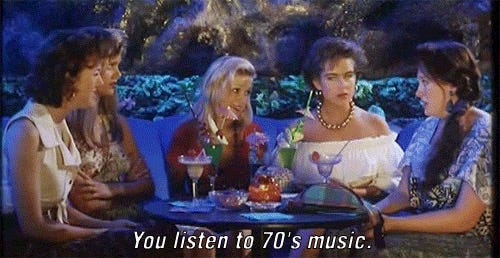
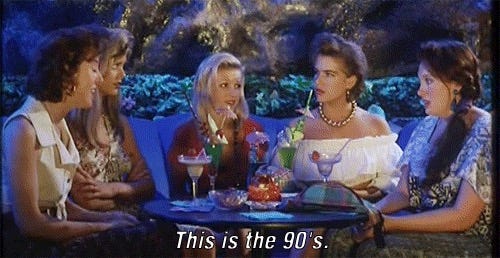
Sometimes I wish my algorithm would talk to me like the mean girls in Muriel’s Wedding.
Music Discovery, Now with Real Human
Earlier this year, the Australian music scene was awash with paid promotion for Spotify's new AI-prompted playlist feature, where basically you tell Spotify what you want to hear in a chat and it generates a playlist for you. Influencers declared it had "changed the game,”5 and Spotify’s own press release read "We believe that technology is only as good as the humans behind it. That’s why we created Prompted Playlist." It’s unclear whether the irony was intentional in offering this as a selling point for a playlist assembled by algorithms, but what it revealed, perhaps accidentally, is that Spotify knows that human curation is the gold standard - and is using this to sell us a simulation.
‘Prompted Playlist’ and other AI features like it work well insofar as they can act as a kind of discovery-lube, creating frictionless pathways for listeners to find music they like. But there is also a great case for friction6 in music discovery, because when there are no emotional stakes in how music reaches you, it erodes the meaning of what arrives. And it turns out people who like music really like the process of trawling, crate-searching, and that point of connection in discovery. This is the conundrum at the heart of Spotify's model: the automation and convenience playbook that makes Waymo, Amazon and Uber more valuable genuinely does improve those services, because the friction in transport and delivery is just inefficiency. But friction in music, in both its discovery and creation, is actually a great part of its function, and the mechanism by which it means anything at all. And you can't automate the thing that makes the thing matter without devaluing it.
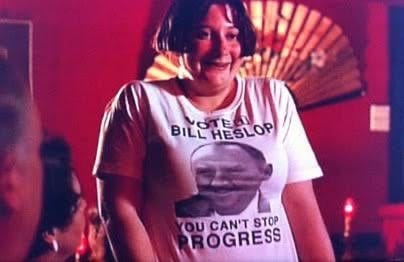
you can’t stop progress, the slogan of every genuinely good guy who definitely doesn’t leave his wife for his secretary.
Inevitability is not demand.
My neighbour here in SF works in user research at Adobe, and one of the things she says constantly is that users - across the board - dislike the AI features Adobe has introduced over the last 18 months, both in practice and principle. In study after study, she gets the same feedback, but management doesn’t want to know about it. Companies feel pressure to introduce AI to appear innovative to investors, but it remains that this seems pretty disconnected from how unpopular it is with regular people.
Interestingly, Spotify understands that AI expansion correlates to listeners caring less about music. As the automated submission system began to take hold in 2023-24, its editors grew more anonymous and less associated with particular playlists. In an internal handbook, Spotify asked editors not to claim ownership of any one playlist, before laying off members of teams involved in playlists as part of its various cuts in early 2024. Pretty soon, different major labels began reporting their artists’ streams from flagship Spotify playlists had dropped anywhere from 30% to 60%7. And when the editorial team posted their song of the summer predictions in 2024, commenters kept asking: "Is this artificial intelligence?" until global head of editorial Sulinna Ong chimed in to confirm they weren't AI. The collective reaction was one of relief.8
“Like Shein or Temu, the modern streaming landscape incentivises high-volume, trend-focused output designed for immediate consumption and rapid decay. This generates revenue for platforms, but it fails to generate cultural capital for the music. In this race to the bottom, music is no longer a primary marker of, or input into, the listener’s identity.” - Kriss Thakrar, MIDIA, March 2026.
The data on listener behaviour is starting to back this up. There is growing evidence that younger listeners are reaching a breaking point with streaming oversaturation (‘discovery fatigue’), and that the demand for niche programming, tastemakers and expert curation are all on the up. 9 Other platforms are doubling down on human curation, like Bandcamp with the release of Bandcamp Clubs.
Spotify has taken note, because in January 2026 their Head of Music announced plans to "bring more of the human voice behind that curation into the listening experience," including having editors share on video why a song resonated with them. But at the same time, behind the scenes, the company has been working to launch new AI-powered remixing platforms, and ‘artist-first’ AI tools alongside the majors, especially UMG who remains a 3.3% shareholder in the company (though this could soon change). But is this move based on what actual fans and artists really want?
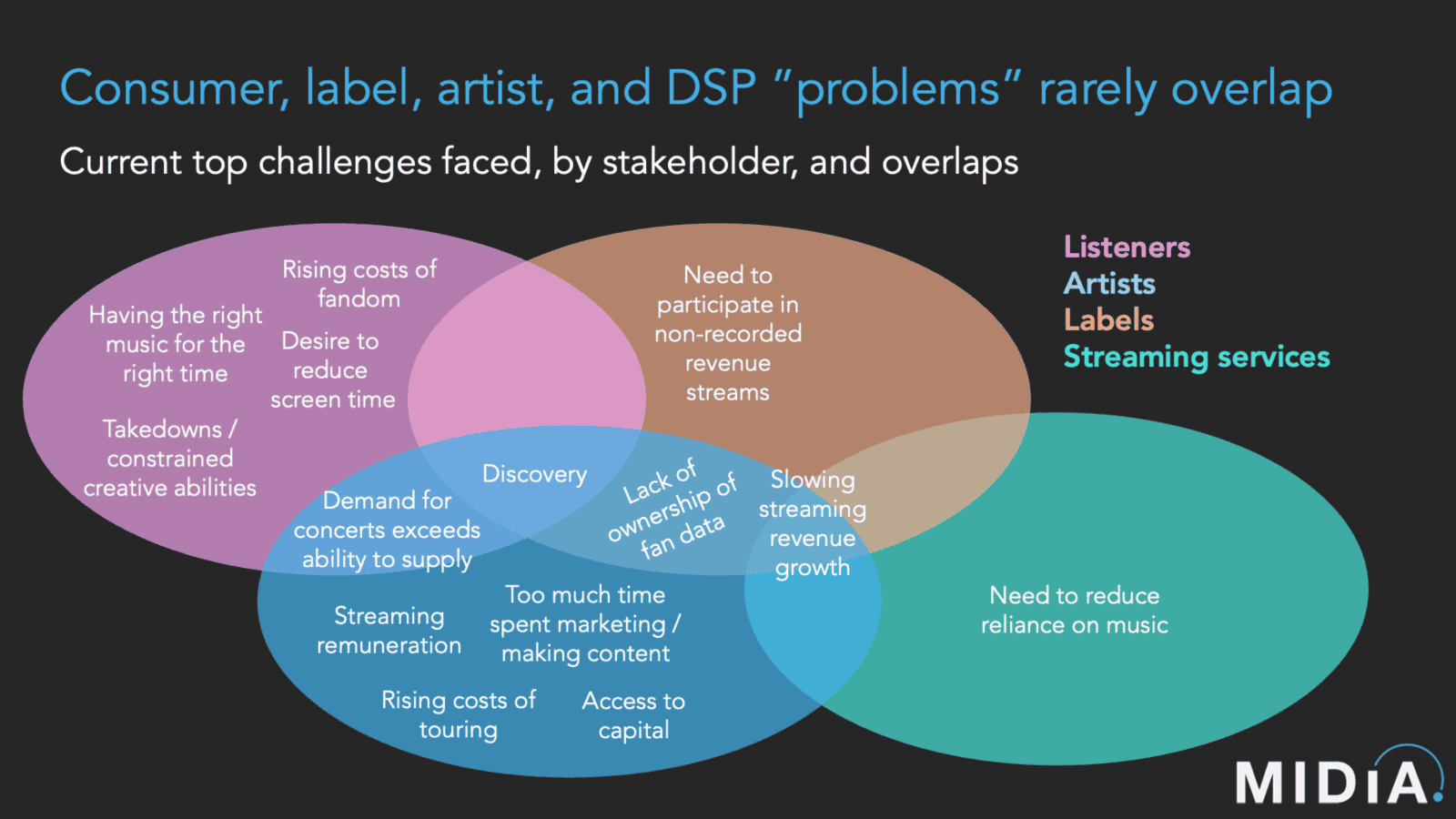
Diagram from Hubspot/MIDIA “The Music Industry wants solutions. But do Listeners see problems?” by Tatiana Cirisano, April 2025
AI is here to stay in the music business, but I want the conversation to move from one of inevitability and monopoly to one of consumer-rights and choice. As a consumer, I should be able to opt out of AI features the way I can opt out of processed ingredients at the supermarket. That would be real personalisation. Currently, Spotify has a monopoly over the industry which makes any kind of competition or meaningful critique moot, and this means artists are discouraged from airing any grievances with the platform, even though we are both creators and consumers. And I think this speaks to something the platform would be unwise to dismiss: there are cracks forming in Spotify’s understory of listeners and artists - not a mass exodus, but a resolute, accumulating disillusionment from people who care the most.
Music is a Forest.
In Seeing Like a State, James C. Scott tells the story of how in 18th-century Prussia and Saxony, the state wanted to know how much revenue its forests could generate, so it developed scientific forestry and the concept of Normalbaum (standard or normal tree) that reimagined the forest purely as a timber-producing resource. They measured trees by how much usable wood they contained, calculated sustainable yields, and then began replanting forests accordingly: neat rows of single-species trees (usually Norway spruce, their version of SlopTree I guess), evenly spaced, easy to measure and harvest. The chaotic old-growth forest was replaced with something that looked, from above, like a ledger.
And it worked, spectacularly, for about one generation. Yields were up, harvests were predictable, the state could finally calculate its resources. But by the second and third generation, the monoculture plantations began to collapse. The Germans even coined a word for this: Waldsterben - forest death - because without the biodiversity of the original forest (the undergrowth, fungi, insects, and symbiotic root networks) the soil degraded, pest populations exploded, and the trees themselves grew weaker. The forest had become optimised for extraction but it was no longer alive. Scott’s term for what was lost is “mētis” - the practical, local, informal knowledge embedded in complex systems that can’t be seen or measured from above but is essential to their functioning.
“This was also of course detrimental to the humans living near and off the forest, now deprived of valuable - and renewable - sources of food, kindling for their fire, foliage for their roofs, herbs for their medicine, sap for their resin… because no one asked them: what is the value of the forest for you? Why does the forest matter to you and your community?
The questions we ask, the measurements we use, are not neutral. They shape our world.”
- Seeing Like a State
Right now, Spotify and others like it, who are themselves not music companies, are ripping up the old forests of music and replacing them with plantation crops, cultivating redwood artists and ignoring undergrowth acts who don’t clock over 1000 streams. This may work for the moment, but longterm it won’t be sustainable financially or culturally.
Distribution monopolies in music specifically have never lasted: sheet music gave way to radio, radio to records, records to cassettes, cassettes to CDs, CDs to downloads, downloads to streaming. Each format created a new power structure that the previous incumbents tried to control and eventually couldn't. And culturally, monocultures in popular music reliably generate their own opposition.
Music has always been an ecosystem, a forest, of which the music industry is only one facet, and far more dependent than it would care to admit on all the other raggedly unmonetisable things that keep it alive: the understory of amateur obsessives, the barely traceable transmission of taste through rich networks of local scenes and unpopular subcultures, and the multilayered strata of various musicians and workers. These aren’t inefficiencies to be optimised away in the name of progress, they’re the whole root systems upon which everything depends.
AI is now part of this system, an introduced species in a complex web, but while recommendation algorithms may suggest what we want is a kind of plantation-style drift toward monoculture, what we really crave is what the algorithms cannot model: the conditions of enriching messiness from which music, art and culture actually evolve.
More to come,
Iz
Images taken from Muriel’s Wedding, one of my favourite Australian films, about two friends who bond over their shared love of ABBA during the cold and heartless 1990s.
Spotify’s recommendation algorithm combines three systems: Collaborative Filtering (mapping your listening behaviour against millions of users), Natural Language Processing (scanning blogs and reviews to build associations between songs and cultural context) and Audio Analysis (breaking down tempo, key and timbre to find sonically similar music). These systems adjust in real time as I skip or save tracks. I can even turn on a ‘private session’ — six hours of unanalysed listening bliss, so I can enjoy Pitbull in peace, or attune it to my taste, which is how the recent AUSIFY campaign worked. Algorithmic Symphonies: How Spotify Strikes The Right Chord by Jonathan Wong, January 21 2024.
The Tech Fantasy that Powers A.I is running on Fumes by Tressie McMillan, NYT, March 2025.
How to break free of Spotify’s algorithm by Tiffany Ng, August 2024
Liz Pelly Confirms What We Already Know by Billy Burgess, Sep 1 2025 (I took this whole section from Billy’s reporting on Pelly’s trip to Australia last year).
Against Frictionless AI by Communications Psychology, Feb 2026
Spotify’s Editorial Playlists Are Losing Influence Amid AI Expansion by Ashley Carman, January 2024
MEET THE EDITORS CRAFTING SOME OF SPOTIFY’S TOP PLAYLISTS: ‘I CAN ASSURE YOU WE’RE NOT AI’ by Kristin Robinson, April 2025
The Music Industry wants solutions. But do Listeners see problems? by Tatiana Cirisano, April 2025
I selected tracks and an iteration of Chatgpt helped me to put them in order and Claude Opus then helped me to disclose a cosmology based on the playlist and an exploration of the title,
"My music has colour"
https://open.spotify.com/playlist/5eut8l1fMsdr8uqKn24aOE?si=kGk9cPi2QLeN8W6rxNCHOw&pi=O4Iks5RnQhyAu